
What impression does the author give about Nazi policies towards women in employment?
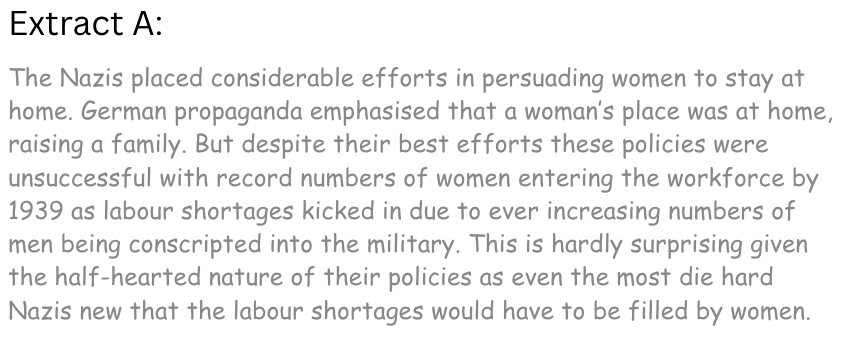
The author gives the impression that Nazi policies towards discouraging women to go out to work were entirely unsuccessful. This can be seen by the words ‘The Nazis placed considerable efforts in persuading women to stay at home.’ and ‘these policies were unsuccessful’. The point is further emphasised by phrases such as ‘half hearted’ to imply that the Nazis were unsuccessful due to the fact that they did not fully commit to these policies.
But the author perhaps underplays the initial success the Nazis had in persuading women not to go out to work and downplays the fact that though many women did return to the workforce almost none were able to take anything other than the lowest of positions in factories or the civil services. Restrictions were placed on the number of places given to women at University which greatly limited their future opportunities for work, and with few opportunities for meaningful work many opted out of trying to pursue a professional career, instead marrying young and reluctantly accepting the role of housewife and mother. The author also ignores the fact that they were further incentivised to remain at home by a series of policies such as tax breaks and loans which encouraged them to produce more children, thus tying them to their homes and sacrificing any chance of a career. In addition the overlooks the fact that many women were simply removed from their posts as soon as the Nazis came to power. Numerous female lawyers and judges were sacked, reinforcing the message to women that there would be virtually no possibility of career progression for them.
