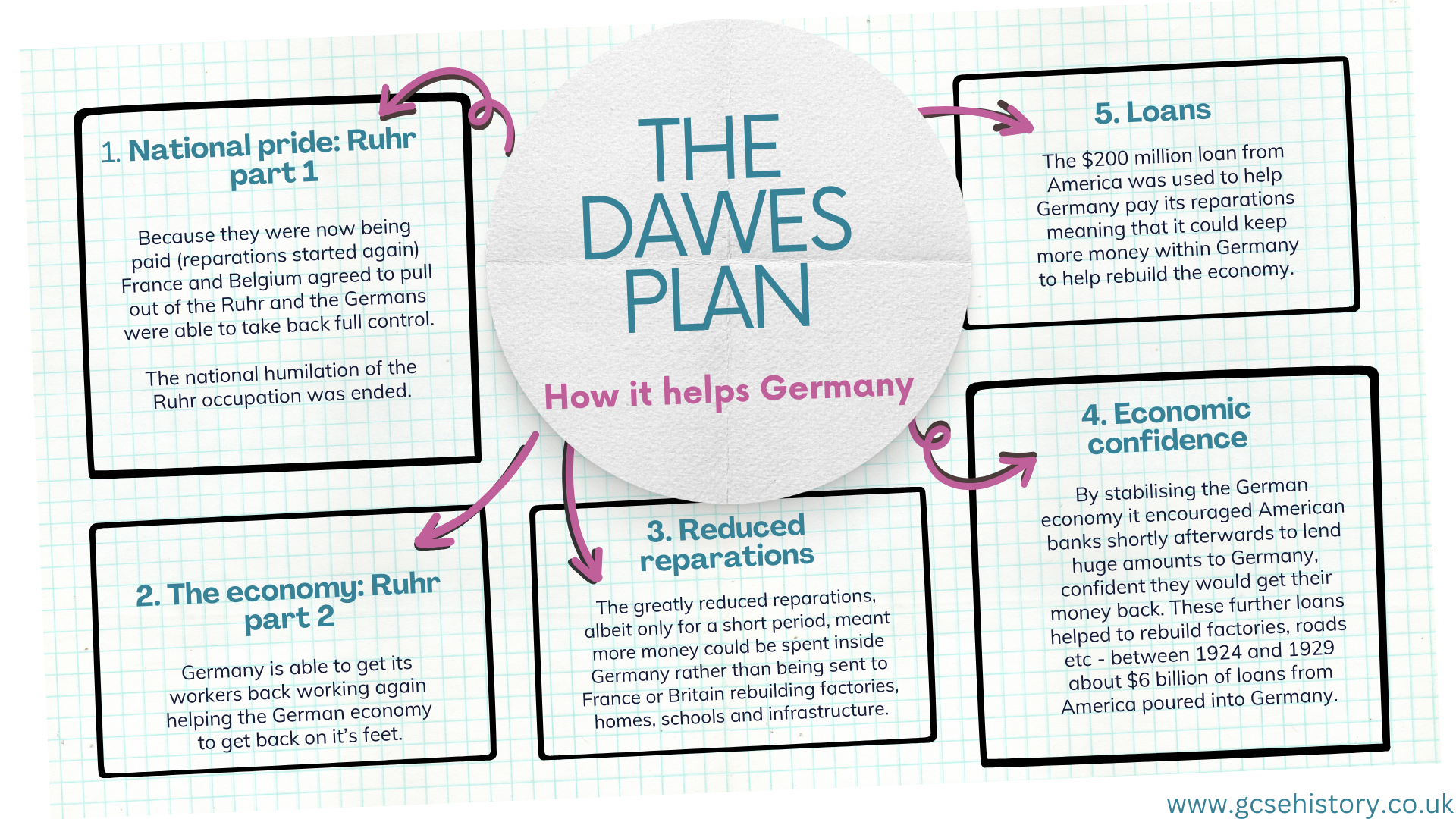
Explain two effects of the Dawes plan.
One effect of the Dawes plan on Germany was the improvement in the economy. Gustav Streseman had helped to negotiate the Dawes plan and with this injection of $200 million dollars from US banks, Germany was able to re-start its reparations payments which meant the French and Belgians left the Ruhr leaving the coal and its revenues to remain inside Germany. The coal could then be used to restart factories that had been forced to stop due to shortages of coal, triggering a major expansion in economic output such that unemployment went from 28% during the hyperinflationary period to an average of just 6% between 1924-1929 period. In addition, some of the money from the Dawes plan could now be used to help Germany industry re-tool and purchase the equipment they needed to expand.
A second effect was that it led to even more money being invested by American banks. The Dawes plan helped to stabilise the German economy by lowering inflation and unemployment. This made Germany a less risky and potentially attractive place to invest in and because it was a more attractive place to do business, American banks were keen to lend more money. They lent about $3 billion of loans between 1924 and 1929 into Germany to further help rebuild factories, roads and develop the country’s railway infrastructure.